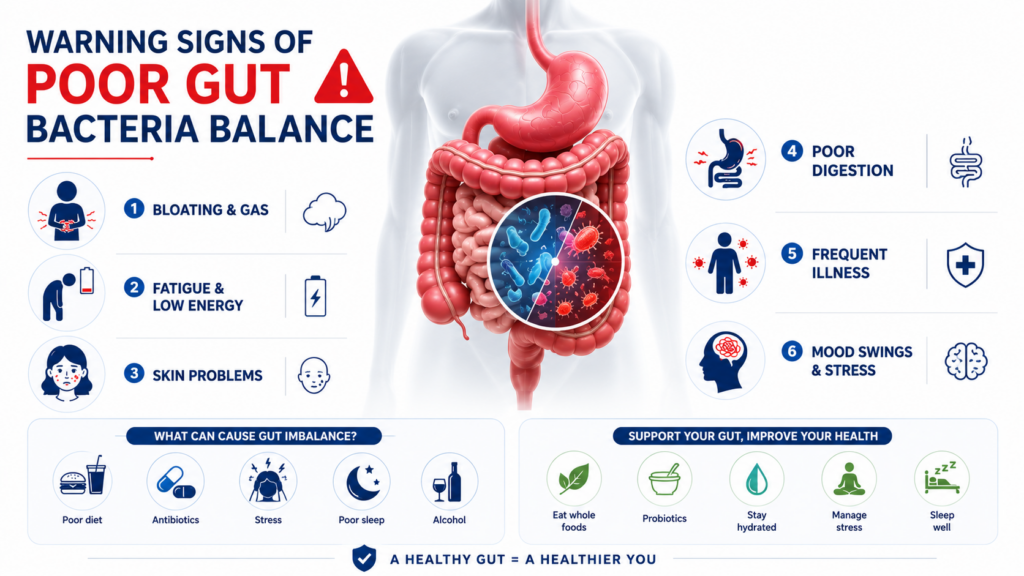
Your gut is home to trillions of microorganisms, including bacteria, fungi, viruses, and other microbes. Together, they form what is commonly called the gut microbiome. These microbes play an important role in digestion, nutrient absorption, immune defense, metabolism, inflammation control, and even mood regulation.
A healthy gut usually contains a diverse balance of helpful bacteria. But when harmful microbes increase, beneficial bacteria decrease, or microbial diversity becomes poor, the gut may become imbalanced. This condition is often referred to as gut dysbiosis. You can learn more about the gut microbiome from Wikipedia’s overview of gut microbiota and the concept of dysbiosis.
Poor gut bacteria balance does not always cause obvious symptoms at first. In many people, the signs appear slowly through digestion problems, low energy, food sensitivity, skin changes, mood issues, or frequent illness. Understanding these warning signs can help you take early steps toward better gut health.
What Does Poor Gut Bacteria Balance Mean?
Poor gut bacteria balance means the natural microbial environment inside your digestive tract is disturbed. This can happen when:
| Gut Imbalance Type | What It Means |
| Low beneficial bacteria | Helpful bacteria such as Lactobacillus and Bifidobacterium may become reduced. |
| Too many harmful microbes | Unfriendly bacteria, yeast, or pathogens may grow more than normal. |
| Low microbial diversity | The gut has fewer different types of beneficial microbes. |
| Inflammation-driven imbalance | Chronic gut irritation may change the microbiome environment. |
| Poor digestion support | The gut may not break down food or absorb nutrients efficiently. |
The gut microbiome is connected to many body systems. Research suggests it may influence digestion, immune function, metabolic health, and brain-gut communication. According to the Harvard T.H. Chan School of Public Health, diet, lifestyle, antibiotics, stress, and illness can all affect the gut microbiome.
1. Frequent Bloating and Gas
One of the most common warning signs of poor gut bacteria balance is regular bloating. Some gas after meals is normal, especially after eating beans, cruciferous vegetables, or high-fiber foods. But if bloating happens almost daily, feels painful, or comes with pressure and discomfort, it may suggest that your gut bacteria are not digesting food properly.
When gut bacteria ferment undigested carbohydrates, gas is produced. In a balanced gut, this process is usually controlled. But when certain bacteria overgrow, fermentation may become excessive, causing bloating, burping, abdominal tightness, and flatulence.
This can also happen in conditions like irritable bowel syndrome, which is explained by the National Institute of Diabetes and Digestive and Kidney Diseases.
2. Constipation or Diarrhea
Changes in bowel habits are another major sign of gut imbalance. Healthy digestion does not mean you must have a bowel movement at the exact same time every day, but your pattern should be fairly regular and comfortable.
Poor gut bacteria balance may contribute to:
| Bowel Change | Possible Gut Connection |
| Constipation | Low fiber intake, reduced beneficial bacteria, slow gut movement |
| Diarrhea | Infection, inflammation, food intolerance, microbial imbalance |
| Alternating constipation and diarrhea | Possible IBS-like pattern or gut sensitivity |
| Loose stools after certain foods | Poor digestion, intolerance, or microbiome disruption |
Beneficial gut bacteria help produce short-chain fatty acids such as butyrate, acetate, and propionate. These compounds support the gut lining and help regulate bowel movement. When beneficial bacteria decrease, stool consistency and gut motility may become irregular.
3. Food Intolerances or Sensitivities
If you suddenly feel uncomfortable after eating foods that never bothered you before, your gut may be sending a signal. Poor gut bacteria balance can affect how your body breaks down certain foods.
Common symptoms may include:
| Trigger Food Type | Possible Symptoms |
| Dairy products | Bloating, cramps, loose stools |
| Gluten-containing foods | Digestive discomfort in sensitive individuals |
| High-FODMAP foods | Gas, bloating, abdominal pain |
| Sugary foods | Cravings, bloating, energy crashes |
| Fried foods | Heaviness, reflux, slow digestion |
Food intolerance is not the same as a food allergy. A food allergy involves the immune system and may cause serious reactions. Food intolerance usually affects digestion and may cause discomfort. If symptoms are severe, persistent, or include swelling, breathing difficulty, blood in stool, or unexplained weight loss, medical care is important.
4. Sugar Cravings and Poor Appetite Control
The relationship between gut bacteria and cravings is still being studied, but research suggests the microbiome may influence appetite, metabolism, and food preferences. Diets high in added sugar and ultra-processed foods may reduce microbial diversity and encourage the growth of less beneficial bacteria.
This can create a cycle:
| Habit | Possible Effect on Gut |
| High sugar intake | May support less beneficial microbes |
| Low fiber intake | Reduces food for beneficial bacteria |
| Frequent processed foods | May reduce microbiome diversity |
| Irregular eating | May disturb digestion rhythm |
| Low protein and low nutrients | May affect fullness and energy |
If you constantly crave sweets, feel hungry soon after eating, or struggle with energy crashes, gut health may be one contributing factor. However, cravings can also come from poor sleep, stress, blood sugar fluctuations, emotional eating, or restrictive dieting.
5. Bad Breath That Does Not Improve Easily
Bad breath is often linked to oral hygiene, gum health, dry mouth, or dental issues. But sometimes, digestive imbalance may also play a role. Poor gut bacteria balance can contribute to fermentation, reflux, or digestive sluggishness, which may worsen breath odor.
Possible gut-related causes include:
| Possible Cause | How It May Affect Breath |
| Acid reflux | Sour or unpleasant breath |
| Slow digestion | Food sits longer in the digestive tract |
| Bacterial imbalance | Increased gas and odor production |
| Constipation | Waste remains longer in the colon |
| Poor diet | High sugar and processed foods may worsen oral and gut bacteria balance |
If bad breath continues despite brushing, flossing, tongue cleaning, and dental care, it may be worth discussing digestion, reflux, or gut symptoms with a healthcare professional.
6. Skin Problems Like Acne, Rashes, or Irritation
The gut and skin are connected through what researchers call the gut-skin axis. Gut imbalance may contribute to inflammation, immune activity, and nutrient absorption issues, which can show up through the skin.
Poor gut health may be associated with:
| Skin Concern | Possible Gut Link |
| Acne flare-ups | Inflammation, diet, hormonal changes, gut imbalance |
| Eczema-like irritation | Immune sensitivity and inflammation |
| Dull skin | Poor nutrient absorption or dehydration |
| Redness | Inflammatory response |
| Slow healing | Nutrient deficiency or immune imbalance |
Skin issues are complex and can be caused by hormones, skincare products, allergies, stress, genetics, or infections. But if skin problems appear along with bloating, irregular stools, fatigue, or food sensitivity, gut health may be worth improving.
7. Low Energy and Fatigue
Poor gut bacteria balance may affect energy in several ways. Your gut helps digest food, absorb nutrients, and support immune function. If digestion is poor or inflammation is present, your body may feel tired more often.
Possible reasons include:
| Gut-Related Issue | How It May Affect Energy |
| Poor nutrient absorption | Low iron, B vitamins, magnesium, or other nutrients |
| Chronic inflammation | Body uses more energy for immune activity |
| Poor sleep from gut discomfort | Less recovery at night |
| Blood sugar swings | Energy spikes and crashes |
| Low microbial diversity | Reduced production of beneficial compounds |
Fatigue is not always caused by gut issues. It may also be linked to anemia, thyroid problems, poor sleep, vitamin D deficiency, stress, depression, or chronic illness. If fatigue is long-lasting or severe, testing may be needed.
8. Frequent Illness or Weak Immunity
A large part of the immune system is connected to the gut. The gut lining acts as a barrier, helping prevent harmful substances from entering the bloodstream. Beneficial bacteria also help train and regulate immune responses.
The Cleveland Clinic explains that the gut microbiome supports digestion, immune function, and protection against harmful organisms. When the gut microbiome is imbalanced, immune resilience may be affected.
Warning signs may include:
| Immune-Related Sign | Possible Gut Connection |
| Frequent colds | Poor immune regulation |
| Slow recovery | Inflammation or nutrient deficiency |
| Recurring digestive infections | Weak gut barrier or microbial imbalance |
| Mouth ulcers | Nutrient deficiency or immune stress |
| Ongoing inflammation | Gut lining irritation |
A healthy gut does not guarantee you will never get sick, but supporting gut balance can be one part of a stronger wellness routine.
9. Mood Swings, Stress Sensitivity, or Poor Focus

The gut and brain communicate through the gut-brain axis. This connection involves nerves, hormones, immune signals, and microbial metabolites. The vagus nerve is one important communication pathway between the gut and brain.
Some gut bacteria help produce or influence compounds related to mood and nervous system function. Poor gut health may not directly “cause” anxiety or depression, but it may contribute to inflammation, poor sleep, low energy, and discomfort — all of which can affect mental well-being.
Possible warning signs include:
| Mental or Emotional Sign | Possible Gut Connection |
| Brain fog | Inflammation, poor sleep, nutrient gaps |
| Mood swings | Blood sugar changes, gut-brain signaling |
| Stress sensitivity | Gut discomfort and nervous system activation |
| Poor focus | Low energy or nutrient deficiency |
| Restless sleep | Digestive discomfort or inflammation |
Mental health concerns should always be taken seriously. Gut support may help overall wellness, but it should not replace professional mental health care when needed.
10. Unexplained Weight Changes
The gut microbiome may influence metabolism, appetite, inflammation, and how the body extracts energy from food. Some research suggests gut bacteria patterns may differ between people with different body weights, although weight management is influenced by many factors including diet, activity, sleep, hormones, genetics, and medications.
Poor gut bacteria balance may contribute to:
| Weight-Related Issue | Possible Gut Role |
| Weight gain | Cravings, inflammation, poor satiety |
| Difficulty losing weight | Metabolic disruption, poor sleep, stress |
| Water retention | Inflammation or high-sodium processed foods |
| Loss of appetite | Digestive discomfort or illness |
| Unintentional weight loss | Possible serious digestive or medical issue |
Unexplained weight loss, blood in stool, persistent diarrhea, fever, or severe abdominal pain should be evaluated by a doctor.
Common Causes of Poor Gut Bacteria Balance
Several everyday habits can affect gut bacteria. Some are temporary, while others create long-term imbalance.
| Cause | How It May Affect the Gut |
| Frequent antibiotics | Can reduce both harmful and beneficial bacteria |
| Low-fiber diet | Starves beneficial microbes |
| High sugar intake | May promote less helpful bacteria |
| Chronic stress | Affects gut movement and inflammation |
| Poor sleep | Disrupts hormones and gut rhythm |
| Excess alcohol | Irritates gut lining and changes microbiome |
| Lack of fermented foods | Reduces exposure to beneficial microbes |
| Low physical activity | May reduce microbial diversity |
| Ultra-processed foods | Often low in fiber and high in additives |
Antibiotics can be lifesaving and should be used when medically necessary. However, unnecessary or repeated antibiotic use may disturb gut bacteria. Always follow medical advice when using antibiotics.
How to Support a Healthier Gut Bacteria Balance
Improving gut health usually requires consistent lifestyle changes rather than quick fixes. The goal is to feed beneficial bacteria, reduce gut irritation, and support digestive function.
1. Eat More Fiber-Rich Foods
Fiber is one of the most important nutrients for gut bacteria. Beneficial microbes ferment fiber and produce short-chain fatty acids that support the gut lining.
Good sources include:
| Food Group | Examples |
| Fruits | Apples, berries, oranges, bananas |
| Vegetables | Spinach, carrots, broccoli, onions |
| Legumes | Lentils, chickpeas, beans |
| Whole grains | Oats, brown rice, barley |
| Seeds | Chia seeds, flaxseeds |
Increase fiber slowly to avoid gas and bloating.
2. Include Fermented Foods
Fermented foods may provide beneficial bacteria or compounds that support gut health. Examples include yogurt with live cultures, kefir, sauerkraut, kimchi, miso, and tempeh.
3. Reduce Added Sugar and Ultra-Processed Foods
A diet high in added sugar and processed foods may reduce gut diversity. Try replacing sugary snacks with fruit, nuts, yogurt, or homemade meals.
4. Stay Hydrated
Water supports digestion, stool softness, and nutrient transport. Dehydration can worsen constipation and digestive discomfort.
5. Manage Stress
Stress can affect gut movement, stomach acid, inflammation, and appetite. Simple practices like walking, breathing exercises, prayer, meditation, journaling, or spending time outdoors may help.
6. Sleep Better
Poor sleep can disturb hunger hormones, immune function, and gut rhythm. Aim for a consistent sleep schedule and reduce late-night screen use.
7. Consider Probiotics Carefully
Probiotics may help some people, especially after antibiotics or during certain digestive issues. However, not every probiotic works for every person. The effect depends on the strain, dosage, and health condition. It is best to ask a healthcare professional if you have a medical condition, weak immune system, or chronic gut symptoms.
When Should You See a Doctor?
Gut imbalance symptoms are common, but some warning signs should not be ignored.
| Seek Medical Advice If You Have: |
| Blood in stool |
| Unexplained weight loss |
| Persistent diarrhea or constipation |
| Severe abdominal pain |
| Fever with digestive symptoms |
| Vomiting that does not stop |
| Symptoms after antibiotics |
| Long-term fatigue with digestive problems |
| Family history of digestive disease |
A doctor may recommend stool tests, blood tests, food intolerance evaluation, or screening for conditions such as IBS, inflammatory bowel disease, celiac disease, infection, or thyroid issues.
Scientific References
- Thursby E, Juge N. “Introduction to the human gut microbiota.” Biochemical Journal, 2017.
- Lynch SV, Pedersen O. “The Human Intestinal Microbiome in Health and Disease.” New England Journal of Medicine, 2016.
- Valdes AM, Walter J, Segal E, Spector TD. “Role of the gut microbiota in nutrition and health.” BMJ, 2018.
- Cryan JF, O’Riordan KJ, Cowan CSM, et al. “The Microbiota-Gut-Brain Axis.” Physiological Reviews, 2019.
- Sender R, Fuchs S, Milo R. “Revised Estimates for the Number of Human and Bacteria Cells in the Body.” PLOS Biology, 2016.
Final Thoughts
Poor gut bacteria balance can show up in many ways, including bloating, gas, constipation, diarrhea, sugar cravings, skin irritation, fatigue, mood changes, weak immunity, and weight changes. These signs do not always mean something serious, but they are important signals that your digestive system may need better support.
The best approach is to focus on simple, sustainable habits: eat more fiber, include fermented foods, reduce added sugar, drink enough water, manage stress, sleep well, and avoid unnecessary antibiotic use. A healthier gut does not happen overnight, but small daily improvements can help your microbiome become stronger, more diverse, and more balanced over time.