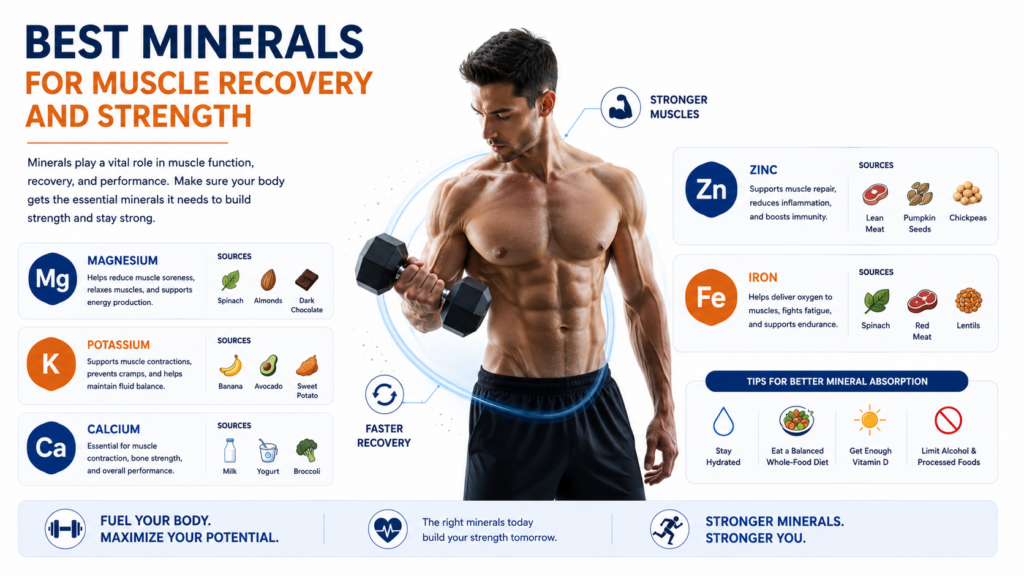
Muscle recovery is not only about protein, stretching, or sleep. Minerals also play a major role in how your muscles contract, relax, rebuild, hydrate, and produce energy. When your mineral intake is low, you may feel more cramps, weakness, fatigue, poor workout performance, slower recovery, or reduced strength progress.
Minerals such as magnesium, potassium, calcium, sodium, zinc, iron, and phosphorus help support nerve signaling, fluid balance, oxygen transport, muscle contraction, bone strength, and energy metabolism. For people who exercise regularly, sweat heavily, lift weights, run, play sports, or follow restrictive diets, mineral balance becomes even more important.
This guide explains the best minerals for muscle recovery and strength, how they work, food sources, deficiency signs, and practical tips to use them safely.
Note: This content is educational only and does not replace medical advice. People with kidney disease, heart disease, high blood pressure, anemia, thyroid issues, or those taking medications should consult a healthcare professional before using mineral supplements.
Why Minerals Matter for Muscle Recovery
Muscles work through a combination of nerve signals, electrolyte movement, energy production, and protein repair. When you exercise, your muscles experience stress. Tiny muscle fibers can become damaged, glycogen stores are reduced, and electrolytes are lost through sweat. Your body then begins the recovery process.
Minerals help in this recovery process by supporting:
| Recovery Function | Minerals Involved | Why It Matters |
| Muscle contraction | Calcium, magnesium, potassium, sodium | Helps muscles tighten and relax properly |
| Hydration balance | Sodium, potassium, magnesium | Supports fluid balance and prevents dehydration-related fatigue |
| Energy production | Magnesium, phosphorus, iron | Helps convert food into usable energy |
| Oxygen delivery | Iron | Supports red blood cells and endurance |
| Tissue repair | Zinc, magnesium | Supports protein synthesis and immune function |
| Bone and joint support | Calcium, phosphorus, magnesium | Provides structural support for strength training |
Minerals are also linked with electrolytes, which are substances that carry an electric charge in body fluids. Electrolytes such as sodium, potassium, calcium, and magnesium are essential for nerve impulses and muscle function. You can read more about electrolytes on Wikipedia’s electrolyte page.
1. Magnesium: The Recovery and Relaxation Mineral
Magnesium is one of the most important minerals for muscle recovery. It is involved in hundreds of enzyme reactions in the body, including those related to energy production, muscle function, nerve signaling, and protein synthesis.
For active people, magnesium is especially important because it helps muscles relax after contraction. Low magnesium intake may contribute to muscle cramps, tightness, fatigue, poor sleep, and slower recovery.
How Magnesium Supports Muscle Strength
Magnesium helps regulate calcium movement inside muscle cells. Calcium helps muscles contract, while magnesium helps them relax. This balance is important for smooth muscle function. If magnesium is too low, muscles may become more prone to tightness, spasms, or discomfort.
Magnesium also supports ATP production. ATP is the body’s main energy currency. Without enough magnesium, your body may struggle to efficiently produce and use energy during workouts.
The NIH Office of Dietary Supplements provides detailed information on magnesium and its role in health here: NIH Magnesium Fact Sheet.
Best Food Sources of Magnesium
| Food | Why It Helps |
| Pumpkin seeds | Very rich in magnesium and healthy fats |
| Almonds and cashews | Good for recovery snacks |
| Spinach | Provides magnesium plus antioxidants |
| Black beans | Supports muscle recovery with protein and minerals |
| Dark chocolate | Contains magnesium, but should be eaten in moderation |
| Whole grains | Helps maintain steady energy |
Signs You May Need More Magnesium
Common signs of low magnesium intake may include muscle cramps, fatigue, poor sleep, weakness, irritability, or frequent muscle tightness. However, these symptoms can have many causes, so it is better not to self-diagnose.
2. Potassium: The Muscle Hydration Mineral
Potassium is a key electrolyte that helps regulate fluid balance, nerve signals, and muscle contractions. It works closely with sodium to maintain proper hydration and cellular function.
During exercise, especially in hot weather or long sessions, potassium is lost through sweat. If intake is low, you may feel weak, tired, or more prone to cramps.
Why Potassium Matters for Recovery
Potassium helps move nutrients into cells and supports normal muscle contractions. It also helps maintain healthy blood pressure and balances the effects of sodium in the body.
The NIH explains potassium’s role in health here: NIH Potassium Fact Sheet.
Best Food Sources of Potassium
| Food | Potassium Benefit |
| Bananas | Easy pre- or post-workout option |
| Potatoes | Rich in potassium and carbohydrates |
| Sweet potatoes | Good for glycogen replenishment |
| Coconut water | Natural electrolyte drink |
| Lentils and beans | Support recovery with minerals and protein |
| Avocado | Provides potassium and healthy fats |
| Yogurt | Offers potassium, protein, and calcium |
Practical Tip
After a sweaty workout, a meal with potatoes, yogurt, lentils, banana, or coconut water can help restore potassium naturally. Most people should focus on potassium-rich foods rather than supplements because high-dose potassium supplements can be risky, especially for people with kidney or heart conditions.
3. Calcium: The Muscle Contraction and Bone Strength Mineral
Calcium is widely known for bone health, but it is also essential for muscle contraction. When your brain sends a signal to move, calcium is released inside muscle cells to help fibers contract. Without enough calcium, muscle function and strength can suffer.
Calcium is also important for people who lift weights, run, or perform high-impact activities because strong bones support strong movement.
You can learn more about calcium from the NIH here: NIH Calcium Fact Sheet.
Calcium and Muscle Recovery
Calcium supports:
| Function | Recovery Benefit |
| Muscle contraction | Helps muscles generate force |
| Bone strength | Supports resistance training and impact exercise |
| Nerve signaling | Helps communication between nerves and muscles |
| Enzyme function | Supports normal cellular processes |
Best Food Sources of Calcium
| Food | Notes |
| Milk | Classic source of calcium and protein |
| Yogurt | Good for gut health and recovery |
| Cheese | Calcium-rich but should be eaten in moderation |
| Fortified plant milk | Useful for vegan or lactose-free diets |
| Tofu set with calcium | Good plant-based option |
| Sardines with bones | Provides calcium and omega-3 fats |
| Leafy greens | Kale and bok choy are good options |
Calcium and Vitamin D Connection
Calcium absorption depends heavily on vitamin D. A person may eat enough calcium but still have poor calcium status if vitamin D is low. This is especially important for people who get little sunlight exposure.
4. Sodium: The Sweat and Performance Mineral
Sodium often gets a negative reputation because excess intake is linked with high blood pressure in many people. However, sodium is also an essential electrolyte, especially for athletes or people who sweat heavily.
Sodium helps maintain fluid balance, nerve impulses, and muscle contraction. During intense workouts, long runs, sports sessions, or training in hot climates, sodium loss through sweat can be significant.
Sodium’s Role in Muscle Recovery
Sodium helps your body retain fluid after exercise. If you drink only plain water after heavy sweating but do not replace sodium, you may still feel weak, dizzy, or poorly hydrated.
This does not mean everyone needs more salt. It means sodium needs vary depending on sweat rate, climate, workout duration, diet, and health status.
| Situation | Sodium Need |
| Light workout under 45 minutes | Usually normal meals are enough |
| Heavy sweating | May need electrolyte replacement |
| Long endurance training | Sodium may be important during and after exercise |
| High blood pressure | Should follow medical guidance |
| Kidney disease | Sodium intake must be medically managed |
Natural Sodium Sources
Sodium is found in table salt, soups, salted nuts, pickles, electrolyte drinks, and many packaged foods. For daily health, it is better to avoid excessive processed food and use sodium strategically around intense exercise when needed.
5. Zinc: The Repair and Immune Support Mineral
Zinc supports immune function, wound healing, protein synthesis, hormone function, and cellular repair. These functions are important for muscle recovery because intense training creates stress in the body.
Zinc does not directly “build muscle” like resistance training and protein do, but low zinc intake can affect recovery, immunity, appetite, and performance.
The NIH offers detailed zinc information here: NIH Zinc Fact Sheet.
How Zinc Supports Strength and Recovery
Zinc supports the body’s repair processes after workouts. It also plays a role in maintaining normal testosterone levels in people who are deficient, although taking extra zinc beyond your needs does not automatically increase testosterone or muscle mass.
Best Food Sources of Zinc
| Food | Benefit |
| Oysters | One of the richest zinc sources |
| Beef | High in zinc and protein |
| Pumpkin seeds | Good plant-based zinc source |
| Chickpeas | Provides zinc, protein, and fiber |
| Cashews | Useful recovery snack |
| Eggs | Provides zinc and amino acids |
| Dairy products | Moderate zinc source |
Supplement Caution
Too much zinc can reduce copper absorption and may cause nausea or digestive discomfort. Long-term high-dose zinc supplementation should be avoided unless recommended by a healthcare professional.
6. Iron: The Oxygen and Endurance Mineral
Iron is essential for oxygen transport. It is a key part of hemoglobin, the protein in red blood cells that carries oxygen to working muscles. Low iron can lead to fatigue, weakness, shortness of breath, poor endurance, and reduced performance.
Iron is especially important for menstruating women, endurance athletes, vegetarians, vegans, and people with a history of anemia.
Why Iron Helps Muscle Performance
Your muscles need oxygen to produce energy, especially during endurance activities. When iron is low, oxygen delivery can decline. This may make workouts feel harder and recovery slower.
| Group | Why Iron Matters |
| Runners | Foot-strike hemolysis and sweat losses may increase risk |
| Menstruating women | Monthly blood loss increases iron needs |
| Vegetarians/vegans | Plant iron is less easily absorbed |
| Strength athletes | Supports oxygen delivery and energy metabolism |
Best Food Sources of Iron
| Food | Type of Iron |
| Red meat | Heme iron, better absorbed |
| Chicken and fish | Heme iron |
| Lentils | Non-heme iron |
| Spinach | Non-heme iron |
| Beans | Non-heme iron |
| Pumpkin seeds | Non-heme iron |
| Fortified cereals | Often high in iron |
Absorption Tip
Vitamin C improves absorption of plant-based iron. For example, combine lentils with lemon juice, spinach with citrus, or beans with tomatoes.
Do not take iron supplements unless a blood test confirms low iron or a clinician recommends it. Excess iron can be harmful.
7. Phosphorus: The Energy and Bone Support Mineral
Phosphorus is another important mineral for muscle strength because it is part of ATP, the body’s energy molecule. It also supports bones, teeth, and cell membranes.
Most people get enough phosphorus through food, especially if they eat protein-rich foods. However, it still plays a major role in strength and recovery.
Food Sources of Phosphorus
| Food | Recovery Benefit |
| Chicken | Protein and phosphorus |
| Fish | Supports muscle repair |
| Eggs | Good complete protein source |
| Dairy | Provides calcium and phosphorus |
| Lentils | Plant protein and minerals |
| Nuts and seeds | Good for energy and recovery |
Phosphorus works closely with calcium. A balanced diet usually supports both minerals naturally.
Best Minerals for Different Recovery Goals
| Goal | Most Important Minerals | Best Food Strategy |
| Muscle cramps | Magnesium, potassium, sodium | Banana, coconut water, nuts, leafy greens |
| Strength training recovery | Magnesium, zinc, calcium, phosphorus | Yogurt, eggs, seeds, beans, dairy |
| Endurance performance | Iron, sodium, potassium, magnesium | Lentils, potatoes, electrolyte foods, iron-rich meals |
| Hydration | Sodium, potassium, magnesium | Electrolyte drinks, fruits, soups, coconut water |
| Bone support | Calcium, magnesium, phosphorus | Dairy, tofu, leafy greens, fish |
| Low energy | Iron, magnesium, phosphorus | Beans, meat, seeds, whole grains |
Best Mineral-Rich Foods for Muscle Recovery
Instead of depending only on supplements, most people should first improve their diet. Whole foods provide minerals along with protein, carbohydrates, vitamins, antioxidants, and fiber.
| Food | Key Minerals | Best Use |
| Greek yogurt | Calcium, potassium, phosphorus | Post-workout snack |
| Banana | Potassium, magnesium | Before or after workout |
| Pumpkin seeds | Magnesium, zinc, iron | Add to oats or smoothies |
| Spinach | Magnesium, iron, potassium | Add to meals or smoothies |
| Lentils | Iron, magnesium, potassium | Recovery meal |
| Eggs | Zinc, phosphorus, iron | Muscle repair support |
| Sweet potatoes | Potassium, magnesium | Replenish energy |
| Almonds | Magnesium, calcium | Healthy snack |
| Fish | Phosphorus, iron, zinc | Protein-rich recovery meal |
| Coconut water | Potassium, sodium | Light hydration support |
Should You Take Mineral Supplements?
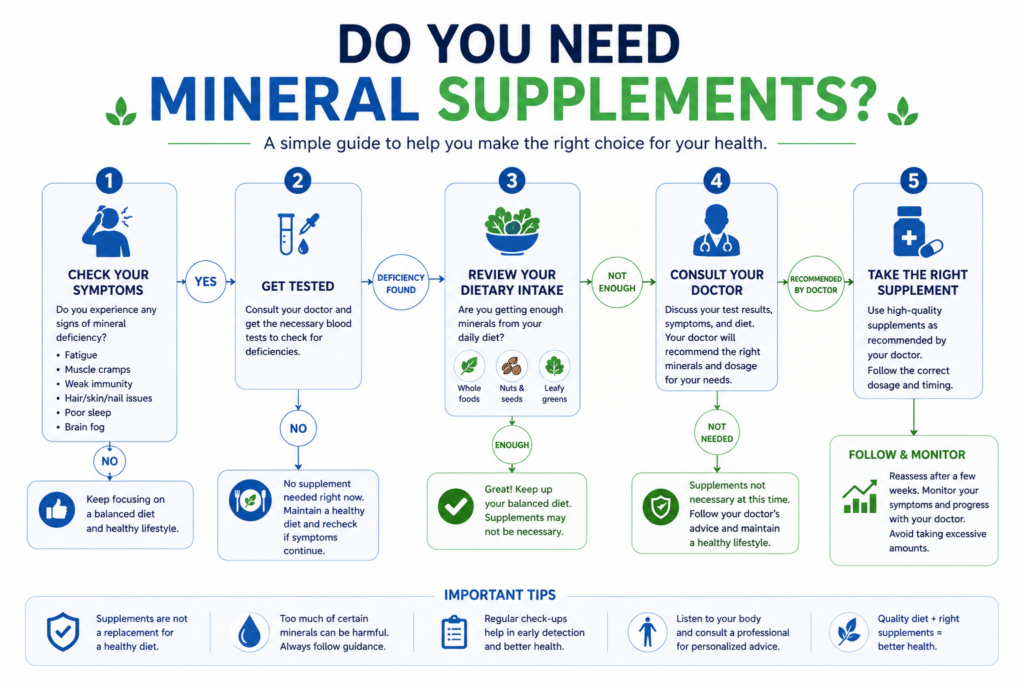
Mineral supplements can help when there is a true deficiency, but they are not always necessary. More is not always better. In fact, too much of certain minerals can cause side effects.
When Supplements May Be Helpful
Supplements may be useful if you:
- Have a diagnosed deficiency
- Sweat heavily during training
- Follow a restrictive diet
- Are vegan or vegetarian and struggle with iron or zinc intake
- Have frequent cramps linked to low electrolyte intake
- Have low energy and confirmed low iron levels
- Do intense endurance training
When to Be Careful
Be careful with supplements if you have kidney disease, high blood pressure, heart rhythm problems, anemia, thyroid issues, or take medications such as blood pressure drugs, diuretics, antibiotics, or thyroid medication.
Iron, potassium, and calcium supplements should be used carefully because excess intake can cause health problems.
Simple Mineral Recovery Meal Ideas
| Meal Idea | Minerals Provided |
| Greek yogurt + banana + pumpkin seeds | Calcium, potassium, magnesium, zinc |
| Lentil soup + spinach + lemon | Iron, magnesium, potassium |
| Eggs + whole-grain toast + avocado | Zinc, phosphorus, potassium |
| Sweet potato + grilled chicken + vegetables | Potassium, phosphorus, magnesium |
| Smoothie with spinach, yogurt, banana, and chia seeds | Calcium, magnesium, potassium |
| Tofu bowl with greens and sesame seeds | Calcium, iron, magnesium |
Practical Tips to Improve Mineral Balance
- Eat mineral-rich foods daily
Include nuts, seeds, dairy or fortified alternatives, beans, leafy greens, fruits, eggs, and whole grains. - Replace electrolytes after heavy sweating
Water is important, but after long or sweaty workouts, sodium and potassium may also be needed. - Do not ignore fatigue or weakness
Constant tiredness may be linked to iron, magnesium, vitamin D, sleep issues, thyroid problems, or other health concerns. - Avoid over-supplementing
Taking high doses of minerals without testing can create imbalances. - Pair minerals with a balanced recovery plan
Minerals work best when combined with enough protein, carbohydrates, hydration, stretching, and sleep.
Conclusion
The best minerals for muscle recovery and strength include magnesium, potassium, calcium, sodium, zinc, iron, and phosphorus. Each mineral supports a different part of the recovery process. Magnesium helps muscles relax and produce energy. Potassium and sodium support hydration and muscle signaling. Calcium helps muscles contract and supports bone strength. Zinc supports tissue repair and immune function. Iron helps deliver oxygen to muscles, while phosphorus supports ATP energy production.
For most people, the best approach is to focus on mineral-rich whole foods first. A diet that includes leafy greens, nuts, seeds, yogurt, eggs, lentils, beans, potatoes, fruits, fish, and fortified foods can naturally support recovery and strength. Supplements may help in certain cases, but they should be used carefully and ideally based on real needs or medical testing.
Muscle recovery is not about one single nutrient. It is the result of good training, proper hydration, balanced minerals, enough protein, quality sleep, and consistency. When your mineral intake is strong, your body has better support to perform, repair, and grow stronger over time.
Scientific and Trusted References
- NIH Office of Dietary Supplements – Magnesium Fact Sheet
- NIH Office of Dietary Supplements – Potassium Fact Sheet
- NIH Office of Dietary Supplements – Calcium Fact Sheet
- NIH Office of Dietary Supplements – Zinc Fact Sheet
- Wikipedia – Electrolyte
- Wikipedia – Muscle Contraction
- Lukaski, H. C. “Vitamin and mineral status: effects on physical performance.” Nutrition, 2004.
Thomas, D. T., Erdman, K. A., & Burke, L. M. “Position of the Academy of Nutrition and Dietetics, Dietitians of Canada, and the American College of Sports Medicine: Nutrition and Athletic Performance.” Journal of the Academy of Nutrition and Dietetics, 2016.