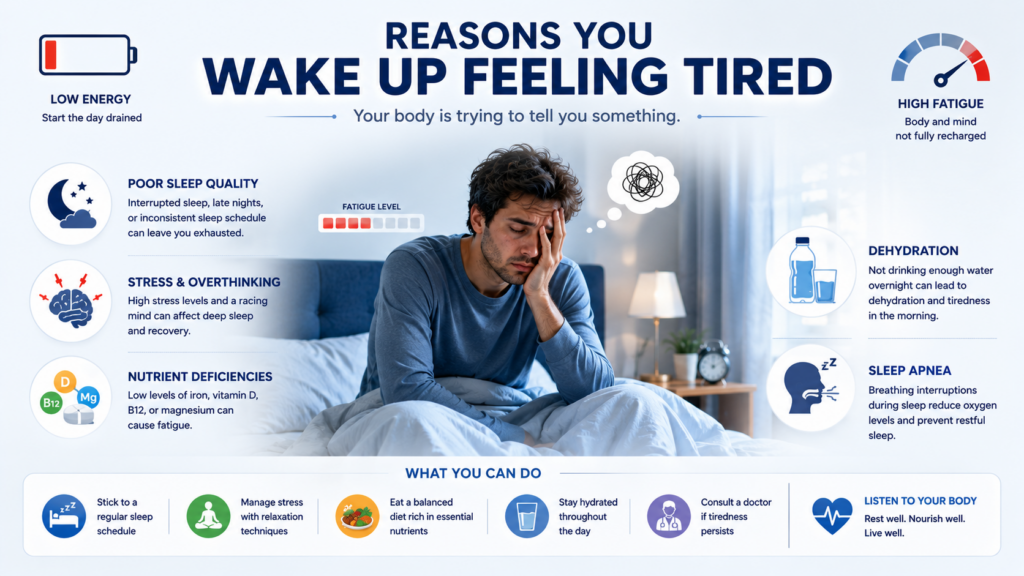
Waking up tired even after sleeping for 7–8 hours can feel frustrating. You may go to bed on time, avoid late-night work, and still wake up with heavy eyes, body fatigue, brain fog, or low motivation. The truth is, feeling tired in the morning is not always about how many hours you sleep. It is also about sleep quality, sleep timing, breathing, stress levels, nutrition, lifestyle habits, and underlying health conditions.
Sleep is a complex biological process that helps the body repair tissues, regulate hormones, support memory, balance mood, and restore energy. According to general sleep science, healthy sleep includes different stages such as light sleep, deep sleep, and REM sleep. You can learn more about the basics of sleep from Wikipedia’s Sleep overview. If these stages are interrupted, you may technically sleep for enough hours but still wake up feeling exhausted.
Quick Overview: Common Reasons You Wake Up Tired
| Possible Cause | How It Affects Morning Energy | Common Signs |
| Poor sleep quality | Prevents deep restoration | Waking often, feeling unrested |
| Sleep apnea | Interrupts breathing and oxygen flow | Snoring, dry mouth, morning headache |
| Irregular sleep schedule | Disrupts body clock | Tired mornings, alertness at night |
| Stress and anxiety | Keeps nervous system active | Racing thoughts, shallow sleep |
| Too much screen time | Delays melatonin release | Trouble falling asleep |
| Dehydration | Reduces physical and mental energy | Dry mouth, headache, dizziness |
| Poor diet or late meals | Affects digestion and blood sugar | Bloating, restlessness |
| Nutrient deficiencies | Impacts muscles, nerves, oxygen transport | Fatigue, cramps, weakness |
| Alcohol or caffeine | Reduces sleep quality | Broken sleep, early waking |
| Medical conditions | Creates chronic fatigue | Persistent tiredness despite rest |
1. You Are Not Getting Enough Deep Sleep
You may sleep for 8 hours, but if your sleep is light and broken, your body may not enter enough deep sleep. Deep sleep is important for physical repair, immune function, growth hormone release, and cellular recovery. REM sleep is also important for memory, emotional processing, and brain performance.
Poor deep sleep can happen due to noise, stress, late-night meals, alcohol, uncomfortable bedding, pain, or irregular sleep habits. When deep sleep is reduced, you may wake up feeling like your body never fully rested.
Signs of poor sleep quality include:
| Sign | What It May Mean |
| Waking up multiple times | Sleep cycles are being interrupted |
| Feeling tired after 8 hours | Sleep quality may be poor |
| Morning headache | Possible breathing issue, dehydration, or tension |
| Brain fog | Lack of restorative sleep |
| Mood swings | Poor REM sleep or chronic sleep disruption |
2. Sleep Apnea May Be Interrupting Your Breathing
One of the most common but overlooked reasons for waking up tired is sleep apnea. Sleep apnea is a condition where breathing repeatedly stops or becomes shallow during sleep. This can reduce oxygen levels and force the brain to briefly wake the body many times during the night.
A person with sleep apnea may not remember waking up, but their sleep becomes fragmented. This can cause morning fatigue, headaches, poor concentration, irritability, and daytime sleepiness. You can read more about this condition from Wikipedia’s Sleep Apnea page and the National Heart, Lung, and Blood Institute sleep apnea guide.
Common signs include loud snoring, gasping during sleep, dry mouth in the morning, morning headaches, high blood pressure, and falling asleep during the day. If these symptoms are present, it is important to speak with a healthcare professional.
3. Your Circadian Rhythm Is Out of Balance
Your body has an internal clock called the circadian rhythm. It controls sleep timing, body temperature, hormone release, digestion, and alertness. When your body clock is disturbed, you may wake up tired even if your sleep duration looks normal.
Circadian rhythm can be affected by late-night screen use, inconsistent sleep timing, shift work, jet lag, late caffeine, and lack of morning sunlight. More information about this biological clock is available on Wikipedia’s Circadian Rhythm page.
For example, if you sleep at 2 a.m. one night and 10 p.m. the next, your brain may struggle to predict when it should release sleep hormones. This can lead to poor sleep quality and morning tiredness.
Healthy circadian rhythm habits:
| Habit | Why It Helps |
| Wake up at the same time daily | Trains your internal clock |
| Get sunlight in the morning | Supports alertness and sleep timing |
| Dim lights at night | Helps melatonin release |
| Avoid late caffeine | Prevents nervous system stimulation |
| Keep sleep timing consistent | Improves sleep quality |
4. Stress Keeps Your Brain Active at Night
Stress is one of the biggest reasons people wake up feeling tired. Even when your body is lying in bed, your brain may remain active. Worry, overthinking, work pressure, emotional stress, financial tension, or personal problems can keep the nervous system in a high-alert state.
When stress hormones such as cortisol remain elevated at night, it becomes harder to enter deep sleep. You may fall asleep but wake frequently, have disturbing dreams, or wake up too early with a racing mind.
A simple night routine can help calm the nervous system. This may include deep breathing, journaling, light stretching, prayer or meditation, reading a physical book, or avoiding stressful conversations before bed.
5. Screen Time Before Bed Can Delay Sleep Hormones
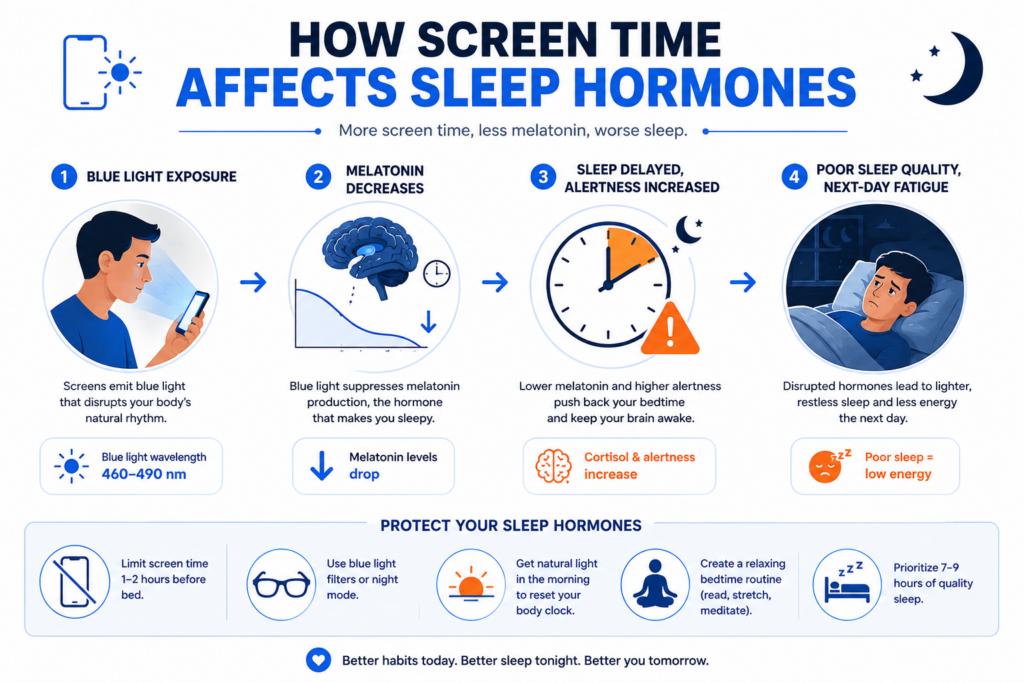
Phones, laptops, tablets, and TVs can affect sleep in two ways. First, bright light exposure at night can delay melatonin, the hormone that signals your body to prepare for sleep. Second, online content can keep your brain emotionally stimulated.
Scrolling social media, watching intense videos, working late, gaming, or reading stressful news can keep the mind alert. Even if you sleep afterward, your sleep may be lighter and less restorative.
Try reducing screen exposure 30–60 minutes before bed. If that is not possible, use night mode, lower brightness, avoid stimulating content, and keep the phone away from your pillow.
6. Dehydration Can Make You Feel Drained in the Morning
Dehydration is a simple but common cause of morning fatigue. During sleep, your body continues to lose water through breathing and sweating. If you did not drink enough water during the day, you may wake up with dry mouth, headache, dizziness, low energy, or poor concentration.
Dehydration can also make your blood slightly more concentrated, which may affect circulation and physical energy. Drinking too much water right before bed is not ideal because it may increase nighttime urination, but staying hydrated throughout the day can support better morning energy.
A good habit is to drink water regularly in the daytime and have a small glass of water after waking.
7. Late Meals and Poor Digestion Can Disturb Sleep
Eating heavy meals late at night can affect sleep quality. When you eat close to bedtime, your digestive system remains active while your body is trying to rest. This may cause acid reflux, bloating, discomfort, or frequent waking.
Spicy foods, fried foods, sugary desserts, and large meals can be especially disruptive for some people. Blood sugar spikes and drops during the night may also contribute to restlessness and early-morning fatigue.
Try to finish your last heavy meal 2–3 hours before bedtime. If you need a small snack, choose something light, such as yogurt, a banana, nuts, or a small portion of protein-rich food.
8. Alcohol Can Make Sleep Less Restorative
Many people believe alcohol helps sleep because it can make you feel drowsy. However, alcohol can reduce sleep quality, disrupt REM sleep, increase snoring, worsen breathing problems, and cause early-morning waking.
Even if alcohol helps you fall asleep faster, it may prevent your brain from completing healthy sleep cycles. This can leave you tired, dehydrated, foggy, and irritable the next morning.
If you often wake up tired after drinking alcohol at night, reducing alcohol intake or avoiding it close to bedtime may improve sleep quality.
9. Caffeine May Stay in Your System Longer Than You Think
Caffeine is found in coffee, tea, energy drinks, cola, chocolate, and some pre-workout supplements. It stimulates the nervous system and can remain active in the body for several hours. For some people, caffeine consumed in the afternoon can still affect sleep at night.
Late caffeine may not always stop you from falling asleep, but it can reduce deep sleep. This means you may sleep for a full night but wake up feeling unrested.
A practical rule is to avoid caffeine after mid-afternoon, especially if you are sensitive to it.
10. Nutrient Deficiencies Can Affect Energy and Sleep
Certain nutrients play a role in oxygen transport, nerve function, muscle relaxation, and energy production. Deficiencies may contribute to tiredness, restless sleep, weakness, or poor focus.
| Nutrient | Role in Energy and Sleep | Possible Signs of Low Levels |
| Iron | Supports oxygen transport | Fatigue, weakness, pale skin |
| Vitamin B12 | Supports nerves and red blood cells | Tiredness, tingling, brain fog |
| Vitamin D | Supports immunity, muscles, mood | Low energy, body aches |
| Magnesium | Supports muscle and nerve relaxation | Cramps, restlessness |
| Folate | Helps red blood cell production | Fatigue, weakness |
Nutrient deficiencies should be confirmed through proper testing. Taking supplements without knowing your levels may not solve the real problem and can sometimes create side effects.
11. Restless Legs or Body Discomfort Can Interrupt Sleep
Restless legs syndrome, muscle cramps, joint pain, back pain, or nerve discomfort can reduce sleep quality. A person may not fully wake up each time, but repeated movement and discomfort can disturb deep sleep.
Restless legs syndrome can cause an uncomfortable urge to move the legs, especially at night. This can make it difficult to fall asleep or stay asleep. The National Institute of Neurological Disorders and Stroke provides information about Restless Legs Syndrome.
If leg discomfort, tingling, cramps, or pain frequently disturbs your sleep, medical evaluation may help identify causes such as iron deficiency, nerve issues, medication effects, or circulation problems.
12. You May Be Experiencing Sleep Debt
Sleep debt happens when you regularly get less sleep than your body needs. For example, sleeping 5–6 hours during weekdays and trying to recover on weekends may not fully restore your body. Chronic sleep debt affects mood, metabolism, immunity, focus, and physical energy.
The CDC explains that adults generally need at least 7 hours of sleep per night, though individual needs can vary. You can read more from the CDC sleep duration guidance.
Signs of sleep debt include daytime sleepiness, cravings, poor memory, irritability, slow reaction time, low workout performance, and difficulty waking up.
13. Mental Health Can Affect Morning Energy
Depression, anxiety, chronic stress, and burnout can all affect sleep and energy. Some people sleep too little, while others sleep longer but still wake up exhausted. Emotional fatigue can feel like physical tiredness.
Depression may cause early-morning waking, low motivation, heavy body feeling, and reduced interest in daily activities. Anxiety may cause racing thoughts, tension, nightmares, or restless sleep.
If morning tiredness is linked with sadness, hopelessness, panic, emotional numbness, or loss of interest, it is important to speak with a mental health professional.
14. Medical Conditions Can Cause Persistent Fatigue

Sometimes waking up tired is not only a sleep issue. Several health conditions can cause ongoing fatigue, including thyroid disorders, anemia, diabetes, chronic infections, autoimmune conditions, kidney or liver problems, hormonal imbalance, and heart-related issues.
If tiredness continues despite improving sleep habits, you should consider a medical checkup. Basic tests may include complete blood count, thyroid function, vitamin B12, vitamin D, iron studies, blood sugar, and other tests based on symptoms.
When to seek medical help:
| Symptom | Why It Matters |
| Loud snoring with choking or gasping | Possible sleep apnea |
| Extreme daytime sleepiness | Poor sleep quality or sleep disorder |
| Morning headaches | Breathing issue, dehydration, or blood pressure concern |
| Fatigue lasting more than 2–3 weeks | Possible medical or mental health cause |
| Chest pain or breathlessness | Needs urgent medical attention |
| Sudden weakness or confusion | Needs immediate evaluation |
How to Wake Up Feeling More Refreshed
Improving morning energy usually requires improving sleep quality, not just sleep duration.
Start by keeping a fixed sleep and wake time, even on weekends. Get natural sunlight soon after waking because it helps reset your body clock. Avoid caffeine late in the day and reduce alcohol close to bedtime. Keep your bedroom cool, dark, quiet, and comfortable.
Create a simple wind-down routine before bed. This may include dimming lights, putting your phone away, stretching, deep breathing, or reading something calm. Avoid heavy meals late at night and try to finish dinner a few hours before sleep.
In the morning, avoid snoozing the alarm repeatedly. Snoozing can increase sleep inertia, which is the heavy, groggy feeling after waking. Instead, get out of bed, drink water, open curtains, and move your body lightly.
Simple Morning Energy Routine
| Time | Action |
| After waking | Drink water and avoid checking phone immediately |
| First 10 minutes | Open curtains or get sunlight |
| First 20 minutes | Light stretching or walking |
| Breakfast | Choose protein + fiber, not only sugar |
| Mid-morning | Avoid too much caffeine if already anxious |
Final Thoughts
Waking up tired can happen for many reasons: poor sleep quality, sleep apnea, stress, irregular sleep timing, dehydration, late meals, alcohol, caffeine, nutrient deficiencies, pain, mental health challenges, or medical conditions. The key is to look beyond sleep duration and focus on what is happening during sleep.
If your tiredness improves with better sleep habits, hydration, stress control, and regular routines, lifestyle may be the main issue. But if fatigue continues, feels severe, or comes with symptoms like loud snoring, morning headaches, breathlessness, dizziness, mood changes, or daytime sleepiness, it is wise to seek medical advice.
Good sleep is not a luxury. It is a foundation for energy, metabolism, immunity, mood, memory, and long-term health.
Scientific References and Trusted Sources
- Watson NF, Badr MS, Belenky G, et al. “Recommended Amount of Sleep for a Healthy Adult.” Journal of Clinical Sleep Medicine, 2015.
- Hirshkowitz M, Whiton K, Albert SM, et al. “National Sleep Foundation’s Sleep Time Duration Recommendations.” Sleep Health, 2015.
- Banks S, Dinges DF. “Behavioral and Physiological Consequences of Sleep Restriction.” Journal of Clinical Sleep Medicine, 2007.
- National Heart, Lung, and Blood Institute: Sleep Apnea
- CDC: How Much Sleep Do I Need?
- Wikipedia: Sleep
- Wikipedia: Circadian Rhythm
- NINDS: Restless Legs Syndrome