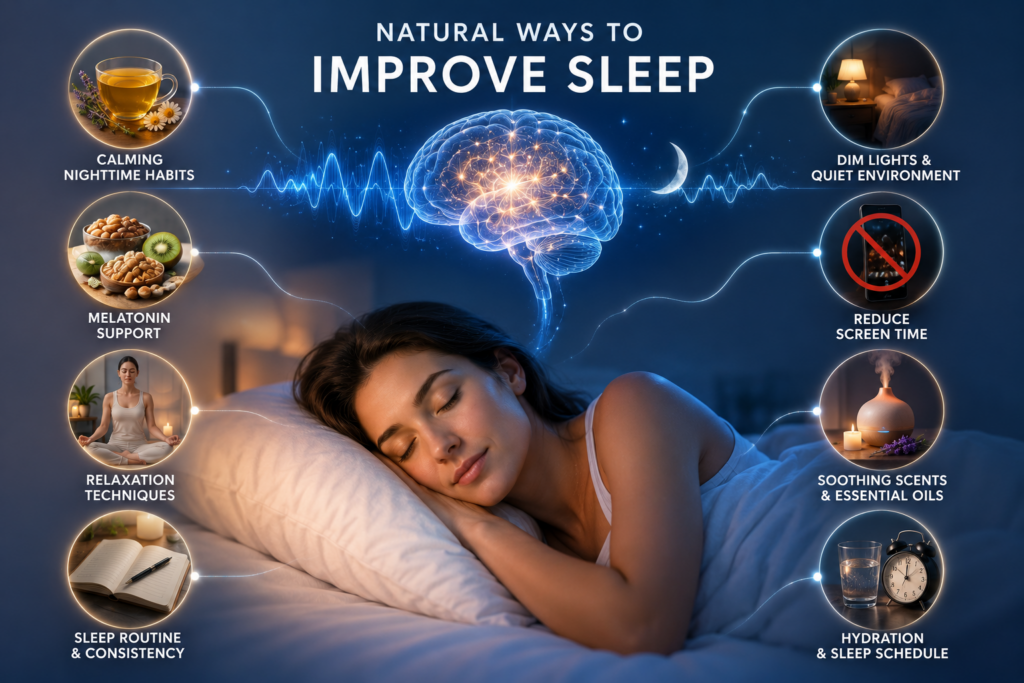
Sleep is one of the most important foundations of good health. It affects your energy, mood, focus, metabolism, immune function, digestion, hormone balance, and even weight management. Yet many people struggle with falling asleep, staying asleep, or waking up feeling refreshed. The good news is that sleep can often be improved naturally by changing daily habits, environment, light exposure, stress levels, meal timing, and bedtime routines.
This guide explains natural, science-supported ways to improve sleep without medication. These tips are designed for general wellness and education. If sleep problems are severe, long-lasting, or linked with breathing issues, pain, anxiety, depression, or other health conditions, it is best to consult a qualified healthcare professional.
What Is Healthy Sleep?
Healthy sleep is not just about the number of hours you spend in bed. It also includes sleep quality, sleep timing, and how refreshed you feel during the day. According to health organizations like the CDC, most adults need at least 7 hours of sleep per night. However, sleep needs can vary depending on age, health, activity level, stress, and lifestyle.
Sleep has different stages, including light sleep, deep sleep, and REM sleep. Deep sleep supports physical recovery, immune function, and tissue repair, while REM sleep plays an important role in memory, learning, and emotional processing. You can learn more about the biology of sleep from Wikipedia’s sleep overview.
Poor sleep can affect your body in many ways. It may increase daytime fatigue, sugar cravings, irritability, poor concentration, low motivation, and slower recovery after exercise. Over time, chronic sleep problems may also be linked with higher risks of weight gain, high blood pressure, type 2 diabetes, mood disorders, and weakened immunity.
Common Reasons People Sleep Poorly
Many sleep problems are caused by small habits that disrupt the body’s natural sleep-wake rhythm, also known as the circadian rhythm. This internal clock responds strongly to light, darkness, food timing, movement, temperature, and daily routine.
| Sleep Disruptor | How It Affects Sleep | Natural Fix |
|---|---|---|
| Too much screen time at night | Blue light may delay melatonin release | Reduce screens 60 minutes before bed |
| Irregular sleep schedule | Confuses your body clock | Sleep and wake at similar times daily |
| Caffeine late in the day | Stimulates the nervous system | Avoid caffeine 6–8 hours before bed |
| Heavy meals before bed | Can trigger discomfort or reflux | Eat dinner 2–3 hours before sleep |
| Stress and overthinking | Keeps the brain alert | Use relaxation, journaling, or breathing |
| Poor bedroom environment | Noise, heat, or light reduces sleep quality | Keep room cool, dark, and quiet |
Understanding the cause of poor sleep makes it easier to choose the right natural solution.
1. Follow a Consistent Sleep Schedule
One of the most powerful natural ways to improve sleep is to keep a regular bedtime and wake-up time. Your body works best when it follows a predictable rhythm. When you sleep at different times every night, your brain receives mixed signals about when it should feel alert and when it should feel sleepy.
Try to wake up at nearly the same time every day, even on weekends. This helps regulate your circadian rhythm and makes it easier to fall asleep at night. Sleeping in too much on weekends may feel helpful in the short term, but it can create “social jet lag,” making Monday mornings harder.
A consistent schedule also helps your body release sleep-related hormones at the right time. Over time, you may notice that you naturally feel sleepy around bedtime and wake up with less effort.
2. Get Morning Sunlight Exposure
Light is one of the strongest signals for your body clock. Exposure to bright natural light in the morning helps tell your brain that the day has started. This supports daytime alertness and helps your body produce melatonin later in the evening.
Try spending 10–30 minutes outside in the morning, especially soon after waking. A short walk, stretching near sunlight, or drinking water near a window can help. Outdoor light is usually much stronger than indoor lighting, even on cloudy days.
Research shows that circadian rhythm and light exposure are closely connected. Natural light helps regulate sleep timing, mood, and energy. This is one reason why people who spend all day indoors or use bright screens late at night often struggle with sleep.
3. Reduce Blue Light and Screens Before Bed
Phones, laptops, tablets, and televisions can delay sleep because they keep the brain mentally active and expose the eyes to blue-enriched light. Blue light in the evening may reduce or delay melatonin, the hormone that helps prepare the body for sleep.
A simple rule is to reduce screen use at least 60 minutes before bed. If that feels difficult, use night mode, lower brightness, or blue light filters. However, reducing screen stimulation is often more important than just changing the screen color.
Instead of scrolling, try relaxing activities such as reading a physical book, light stretching, prayer, meditation, calming music, or journaling. The goal is to send your brain a clear message: the day is ending, and the body can relax.
4. Create a Relaxing Bedtime Routine
A bedtime routine trains your brain to associate certain activities with sleep. This is especially helpful for people who feel tired but mentally active at night.
A good bedtime routine does not need to be complicated. It can include:
- Taking a warm shower
- Dimming the lights
- Writing down tomorrow’s tasks
- Doing deep breathing
- Reading a calm book
- Drinking caffeine-free herbal tea
- Practicing gratitude or prayer
The routine should be peaceful, repetitive, and low-stimulation. Avoid work emails, intense conversations, stressful news, and emotionally stimulating content before bed.
A warm shower or bath may also help because body temperature naturally drops after you get out, which can support sleepiness.
5. Keep Your Bedroom Cool, Dark, and Quiet
Your sleep environment has a major effect on sleep quality. The body usually sleeps better in a cool, dark, and quiet room. A hot room can cause restlessness, sweating, and frequent waking.
Darkness is also important because light exposure at night can interfere with melatonin. Use blackout curtains, turn off unnecessary lights, and cover bright electronic indicators if needed.
Noise can also reduce deep sleep, even if you do not fully wake up. If your environment is noisy, consider using earplugs, a fan, white noise, or calming background sounds.
| Bedroom Factor | Ideal Sleep-Friendly Setup |
|---|---|
| Temperature | Cool and comfortable |
| Light | As dark as possible |
| Noise | Quiet or consistent soft background sound |
| Mattress/Pillow | Supportive and comfortable |
| Electronics | Away from bed or on silent mode |
| Air Quality | Fresh, clean, and well-ventilated |
A sleep-friendly bedroom makes it easier for your nervous system to relax.
6. Avoid Caffeine Late in the Day

Caffeine is useful for alertness, but it can interfere with sleep for many hours. Coffee, tea, energy drinks, pre-workout supplements, chocolate, and some soft drinks contain caffeine.
Caffeine blocks adenosine, a chemical that builds sleep pressure throughout the day. When caffeine stays active in your system, you may feel less sleepy even when your body needs rest.
Many people sleep better when they stop caffeine after lunch or at least 6–8 hours before bedtime. Sensitive individuals may need to avoid caffeine even earlier.
If you enjoy evening drinks, choose caffeine-free options such as warm water, chamomile tea, peppermint tea, or other calming herbal drinks. However, avoid drinking too much liquid right before bed if nighttime urination wakes you up.
7. Eat Light and Time Your Meals Properly
Food timing can affect sleep. A very heavy meal close to bedtime may cause indigestion, acid reflux, bloating, or discomfort. On the other hand, going to bed extremely hungry can also make it hard to sleep.
Try to finish dinner at least 2–3 hours before bedtime. Choose balanced meals with protein, fiber-rich carbohydrates, and healthy fats. Examples include lentils with rice, vegetables with paneer or tofu, eggs with whole grains, or grilled fish with vegetables.
Avoid very spicy, greasy, or sugary foods late at night if they disturb your digestion. Alcohol may make some people feel sleepy at first, but it can reduce sleep quality and increase nighttime waking.
8. Exercise Regularly, But Not Too Late
Regular physical activity is strongly linked with better sleep. Exercise helps reduce stress, improve mood, regulate metabolism, and increase sleep pressure by the end of the day.
Moderate activities like walking, yoga, cycling, swimming, or strength training can support better sleep. Morning or afternoon exercise may be especially helpful for people with insomnia-like symptoms.
However, intense workouts too close to bedtime may keep some people alert because exercise raises heart rate, body temperature, and adrenaline. If evening workouts affect your sleep, shift intense training earlier and keep nighttime movement gentle, such as stretching or slow yoga.
9. Manage Stress Before It Reaches the Bed
Stress is one of the biggest causes of poor sleep. Many people lie in bed physically tired but mentally awake because their brain is still processing worries, tasks, or emotional pressure.
Natural stress-management techniques can help calm the nervous system. Deep breathing is one of the simplest methods. Try this:
Inhale slowly for 4 seconds, hold for 2 seconds, and exhale for 6 seconds. Repeat for 5–10 minutes.
Journaling can also help. Before bed, write down your worries, tomorrow’s tasks, and one simple next step. This reduces the feeling that your mind must keep remembering everything overnight.
Mindfulness, meditation, prayer, progressive muscle relaxation, and calming music may also improve sleep quality. Research has shown that relaxation-based methods can help reduce insomnia symptoms in many people.
10. Use the Bed Only for Sleep and Relaxation
Your brain forms associations with places. If you regularly work, scroll, argue, or watch stressful content in bed, your brain may start linking the bed with alertness instead of sleep.
Try to use your bed mainly for sleep and intimacy. If you cannot sleep after around 20–30 minutes, get out of bed and do something quiet in dim light, such as reading a calm book. Return to bed when you feel sleepy.
This method is part of sleep hygiene and behavioral sleep therapy principles. It helps rebuild the connection between bed and sleep.
11. Try Natural Relaxation Supports
Some natural supports may help sleep, but they should be used carefully. Options like chamomile tea, lavender aroma, magnesium-rich foods, and calming evening routines may support relaxation.
Magnesium is involved in muscle and nervous system function. Foods such as pumpkin seeds, almonds, spinach, legumes, and whole grains naturally provide magnesium. However, supplements are not necessary for everyone and should be discussed with a healthcare professional, especially if you have kidney disease or take medications.
Herbal options may interact with medicines or health conditions, so “natural” does not always mean risk-free. Lifestyle habits should always be the first foundation.
12. Avoid Long Daytime Naps

Short naps can be refreshing, but long or late naps may reduce your sleep pressure at night. If you nap for too long in the evening, your body may not feel ready for bedtime.
If you need a nap, keep it short—around 10–30 minutes—and avoid napping late in the day. People with insomnia may benefit from avoiding naps completely until nighttime sleep improves.
When Should You Seek Medical Help?
Natural methods can help many people, but some sleep issues need medical attention. Speak with a healthcare professional if you experience:
- Loud snoring with pauses in breathing
- Waking up gasping or choking
- Severe daytime sleepiness
- Restless legs or uncomfortable leg sensations at night
- Sleep problems lasting more than 3 months
- Anxiety, depression, chronic pain, or medication-related sleep issues
- Frequent morning headaches or high blood pressure with poor sleep
Conditions like sleep apnea, restless legs syndrome, thyroid problems, depression, and chronic pain can disturb sleep and may require proper diagnosis and treatment. You can learn more about sleep disorders from the National Heart, Lung, and Blood Institute.
Simple 7-Day Natural Sleep Reset Plan
Here is a practical routine you can start with:
| Day | Sleep Improvement Focus |
|---|---|
| Day 1 | Fix a consistent wake-up time |
| Day 2 | Get 15–20 minutes of morning sunlight |
| Day 3 | Stop caffeine after lunch |
| Day 4 | Reduce screens 60 minutes before bed |
| Day 5 | Make your bedroom cooler, darker, and quieter |
| Day 6 | Add 10 minutes of breathing or journaling |
| Day 7 | Review what helped and repeat the routine |
The goal is not perfection. The goal is consistency. Small improvements repeated daily can create meaningful sleep changes over time.
Conclusion
Improving sleep naturally is not about one magic trick. It is about building a lifestyle that supports your body’s sleep rhythm. A regular schedule, morning sunlight, less screen time at night, stress management, a calm bedroom, proper meal timing, and regular physical activity can all work together to improve sleep quality.
Medication may be necessary for some people, but many sleep problems improve when the body receives the right daily signals. Start with simple changes and repeat them consistently for a few weeks. Better sleep often begins with better routines.
References and Trusted Sources
- Wikipedia: Sleep
- CDC: About Sleep
- NHLBI: Sleep Deprivation and Deficiency
- Mayo Clinic: Sleep Tips
- Sleep Foundation: Sleep Hygiene
Scientific References
- Walker, M. P. (2017). Why We Sleep: Unlocking the Power of Sleep and Dreams. Scribner.
- Irwin, M. R. (2015). Why sleep is important for health: A psychoneuroimmunology perspective. Annual Review of Psychology, 66, 143–172.
- Medic, G., Wille, M., & Hemels, M. E. H. (2017). Short- and long-term health consequences of sleep disruption. Nature and Science of Sleep, 9, 151–161.
- Irish, L. A., Kline, C. E., Gunn, H. E., Buysse, D. J., & Hall, M. H. (2015). The role of sleep hygiene in promoting public health. Sleep Medicine Reviews, 22, 23–36.
- Reid, K. J., Baron, K. G., Lu, B., Naylor, E., Wolfe, L., & Zee, P. C. (2010). Aerobic exercise improves self-reported sleep and quality of life in older adults with insomnia. Sleep Medicine, 11(9), 934–940.