
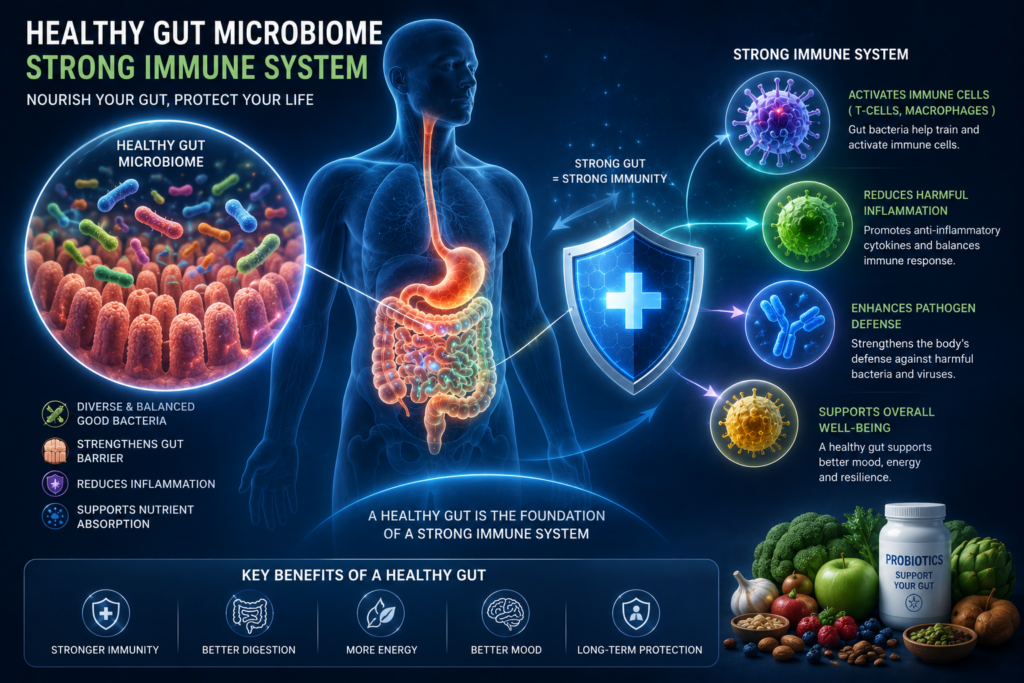
Gut health and immunity are deeply connected. Many people think the gut is only responsible for digestion, but your digestive system does much more than break down food. It plays a major role in immune defense, inflammation control, nutrient absorption, and even the way your body responds to harmful microbes.
A large part of the immune system is closely linked with the gastrointestinal tract. This makes sense because the gut is constantly exposed to food particles, bacteria, viruses, toxins, and environmental substances. Your body needs to absorb nutrients from food while also identifying and defending against harmful invaders. This delicate balance depends heavily on the gut microbiome, the intestinal lining, and immune cells located in and around the digestive tract.
In simple terms, a healthy gut helps train, regulate, and support the immune system. When the gut is balanced, it can help the body respond better to infections and keep inflammation under control. When gut health is poor, it may contribute to digestive discomfort, weaker immune responses, chronic inflammation, and overall poor wellness.
What Is Gut Health?
Gut health refers to the proper function and balance of the digestive system, especially the stomach, intestines, gut lining, and gut microbiome. The gut microbiome is a community of trillions of microorganisms, including bacteria, fungi, viruses, and other microbes that live mostly in the intestines.
Not all bacteria are harmful. In fact, many gut bacteria are beneficial and help your body digest food, produce certain vitamins, support immune function, and protect against harmful organisms. You can learn more about the human gut microbiota from Wikipedia’s article on gut microbiota.
A healthy gut usually has:
- A diverse and balanced microbiome
- A strong intestinal barrier
- Regular bowel movements
- Good nutrient absorption
- Low levels of unnecessary inflammation
- Balanced immune activity
When this system becomes imbalanced, it is often called gut dysbiosis. Dysbiosis means harmful bacteria may increase, beneficial bacteria may decrease, or microbial diversity may become reduced. This imbalance can affect digestion, energy, skin health, mood, and immune defense.
How the Gut and Immune System Are Connected
The gut and immune system communicate constantly. The digestive tract is one of the body’s largest contact points with the outside world because everything you eat and drink passes through it. To protect you, the gut contains immune tissues and immune cells that monitor what enters the body.
One important part of this system is called gut-associated lymphoid tissue, or GALT. It includes immune cells that help detect harmful substances and respond appropriately. These immune cells must make careful decisions. They need to tolerate harmless foods and beneficial bacteria while attacking harmful pathogens.
This is where the gut microbiome becomes important. Beneficial gut bacteria help educate immune cells. They support the production of protective compounds, help maintain the gut barrier, and influence inflammation levels.
According to the Harvard T.H. Chan School of Public Health, the microbiome plays an important role in digestion, immune function, and overall health. Research continues to show that the relationship between gut microbes and immunity is one of the most important areas of modern health science.
The Gut Barrier: Your Body’s Protective Wall
The intestinal lining acts like a selective barrier. It allows nutrients, water, and electrolytes to pass into the bloodstream while helping block harmful bacteria, toxins, and undigested particles.
A strong gut barrier is important for immune balance. When the gut lining is healthy, it helps prevent unnecessary immune activation. But when the gut barrier becomes weakened, substances that should stay inside the gut may pass into the bloodstream. This can trigger immune responses and inflammation.
This condition is sometimes discussed as increased intestinal permeability. While the term “leaky gut” is often used online, it is important to understand that the science is still developing. However, researchers do recognize that intestinal barrier dysfunction may be involved in several inflammatory and immune-related conditions.
Factors that may weaken gut barrier health include poor diet, chronic stress, excessive alcohol, infections, lack of sleep, and long-term imbalance in gut bacteria.
Gut Microbiome and Immune Training
Your immune system needs training. It must learn what is harmful and what is harmless. Gut bacteria help with this process.
Beneficial microbes interact with immune cells and influence how the immune system responds. A balanced microbiome can help the immune system become more accurate. This means it may respond strongly when needed but avoid overreacting when there is no real threat.
This is important because an overactive immune response can contribute to inflammation, allergies, and autoimmune-related problems. On the other hand, a weak immune response may make the body less prepared to fight infections.
Some gut bacteria produce short-chain fatty acids, also called SCFAs. These compounds are made when bacteria ferment fiber in the colon. One important SCFA is butyrate, which supports the cells of the colon lining and helps regulate inflammation.
This is one reason dietary fiber is so important for gut and immune health. Fiber feeds beneficial gut bacteria, and those bacteria produce compounds that support immune balance.
Table 1: How Gut Health Supports Immunity
| Gut Health Factor | How It Helps Immunity |
|---|---|
| Balanced microbiome | Helps train immune cells and protects against harmful microbes |
| Strong gut barrier | Prevents unwanted substances from entering the bloodstream |
| Fiber fermentation | Produces short-chain fatty acids that help regulate inflammation |
| Good nutrient absorption | Supports immune nutrients like zinc, vitamin C, vitamin D, and iron |
| Low gut inflammation | Helps prevent unnecessary immune system stress |
| Microbial diversity | Supports stronger and more balanced immune responses |
Poor Gut Health and Weak Immunity
When gut health is poor, the immune system may become less balanced. This does not always mean you will get sick immediately, but it can create conditions that make the body more vulnerable.
Poor gut health may be linked with:
- Frequent digestive discomfort
- Bloating, gas, or irregular bowel movements
- Low energy due to poor nutrient absorption
- Higher inflammation levels
- Increased sensitivity to certain foods
- More frequent illness in some people
- Slower recovery from stress or infection
The gut microbiome also helps crowd out harmful bacteria. When beneficial bacteria are reduced, harmful microbes may find more space to grow. This can disturb digestion and trigger immune activity.
Antibiotics, while sometimes necessary, can also affect the gut microbiome by reducing both harmful and beneficial bacteria. This is why it is important to use antibiotics only when prescribed by a healthcare professional.
The NIH National Center for Complementary and Integrative Health explains that probiotics may be helpful in certain situations, but their effects depend on the specific strain, dose, and health condition.
Diet: The Biggest Daily Influence on Gut and Immune Health

Food is one of the strongest influences on the gut microbiome. What you eat can either support beneficial bacteria or encourage imbalance.
A gut-friendly diet usually includes whole, minimally processed foods. These foods provide fiber, antioxidants, vitamins, minerals, and natural compounds that support immune function.
Foods that support gut and immune health include:
- Fruits such as berries, apples, oranges, and bananas
- Vegetables such as spinach, carrots, broccoli, and onions
- Whole grains such as oats, brown rice, and barley
- Legumes such as beans, lentils, and chickpeas
- Fermented foods such as yogurt, kefir, sauerkraut, kimchi, and miso
- Nuts and seeds such as almonds, walnuts, flaxseeds, and chia seeds
- Healthy fats from olive oil, avocado, and fatty fish
Fiber-rich foods are especially important because they feed beneficial bacteria. Fermented foods may also add helpful microbes or microbial compounds that support gut balance.
On the other hand, diets high in ultra-processed foods, added sugar, low-quality fats, and low fiber may reduce microbiome diversity and increase inflammation.
Table 2: Gut-Friendly Foods and Their Immune Benefits
| Food Type | Examples | Gut and Immune Benefit |
|---|---|---|
| High-fiber foods | Oats, beans, vegetables, fruits | Feed beneficial gut bacteria |
| Fermented foods | Yogurt, kefir, kimchi, sauerkraut | May support microbiome balance |
| Prebiotic foods | Garlic, onions, bananas, asparagus | Help nourish good bacteria |
| Antioxidant-rich foods | Berries, leafy greens, colorful vegetables | Help reduce oxidative stress |
| Protein foods | Eggs, fish, lentils, lean meats | Support immune cell repair and function |
| Healthy fats | Olive oil, nuts, seeds, fatty fish | Help regulate inflammation |
Probiotics, Prebiotics, and Immunity
Probiotics and prebiotics are often discussed when talking about gut health.
Probiotics are live microorganisms that may provide health benefits when consumed in proper amounts. They are found in some fermented foods and supplements. However, not all probiotics work the same way. Different strains may have different effects.
Prebiotics are types of fiber that feed beneficial gut bacteria. They are naturally found in foods like garlic, onions, leeks, asparagus, bananas, oats, and legumes.
For general gut and immune support, prebiotic foods are often a smart place to start because they help nourish the bacteria already living in your gut.
Probiotic supplements may be useful for some people, especially after antibiotic use or for specific digestive concerns, but they are not a magic solution. Anyone with serious health conditions, immune suppression, or ongoing digestive issues should speak with a healthcare provider before using probiotic supplements.
You can also read more about probiotics from the Cleveland Clinic.
Inflammation: The Link Between Gut Imbalance and Immune Stress
Inflammation is a natural immune response. It helps the body fight infections and heal injuries. But chronic inflammation can become harmful when it continues for too long.
Poor gut health may contribute to chronic low-grade inflammation. An imbalanced microbiome, weak gut barrier, and poor diet can all increase immune system stress.
A healthy gut helps regulate inflammation by producing beneficial compounds, supporting the gut lining, and communicating with immune cells. This is one reason gut health is often connected with overall wellness, not just digestion.
The relationship between inflammation, immunity, and the gut is complex. It does not mean every health problem starts in the gut, but it does mean gut health can strongly influence how the immune system behaves.
Gut Health, Nutrients, and Immune Function
Your immune system needs nutrients to work properly. These include vitamin C, vitamin D, zinc, iron, selenium, protein, and several B vitamins.
A healthy gut helps absorb these nutrients from food. If digestion or absorption is poor, the immune system may not receive enough nutritional support.
For example:
Vitamin C supports immune cell function and antioxidant defense.
Vitamin D helps regulate immune responses.
Zinc supports wound healing and immune cell activity.
Protein provides building blocks for antibodies and immune tissues.
Iron is important for oxygen transport and immune function, but both deficiency and excess can be harmful.
This is why gut health and nutrition should be viewed together. Eating nutrient-rich foods is important, but your body also needs a healthy digestive system to absorb and use those nutrients effectively.
Lifestyle Factors That Affect Gut and Immunity

Diet is important, but it is not the only factor. Your lifestyle also affects your microbiome and immune system.
Poor sleep can disturb immune function and may negatively affect gut bacteria. Chronic stress can change gut movement, increase inflammation, and disrupt the gut-brain connection. Lack of exercise may reduce microbial diversity, while regular physical activity can support both gut and immune health.
Helpful habits include:
- Sleeping 7–9 hours per night
- Managing stress through breathing, walking, yoga, prayer, meditation, or journaling
- Exercising regularly
- Drinking enough water
- Eating meals at consistent times
- Avoiding unnecessary antibiotics
- Limiting alcohol and smoking
- Reducing ultra-processed foods
These simple lifestyle habits may not give instant results, but over time they create a healthier internal environment for digestion and immunity.
Signs Your Gut May Need Support
Your gut may need more attention if you often experience:
- Bloating or gas
- Constipation or diarrhea
- Frequent stomach discomfort
- Food sensitivity-like reactions
- Low energy after meals
- Poor sleep
- Frequent cravings for sugar
- Skin flare-ups
- Frequent illness or slow recovery
These signs do not always mean you have a serious gut problem. They can happen for many reasons. But if symptoms are ongoing, severe, or affecting daily life, it is best to consult a qualified healthcare professional.
Simple Ways to Improve Gut Health for Better Immunity
Improving gut health does not require extreme diets. Small, consistent changes work better for most people.
Start by increasing fiber slowly. Add more vegetables, fruits, whole grains, and legumes. If you suddenly eat too much fiber, you may experience bloating, so increase gradually.
Add fermented foods if they suit your body. Yogurt with live cultures, kefir, kimchi, and sauerkraut can be helpful options. Choose low-sugar versions when possible.
Reduce added sugar and ultra-processed foods. These foods can crowd out healthier options and may negatively affect gut bacteria.
Stay hydrated. Water supports digestion, bowel movement regularity, and nutrient transport.
Prioritize sleep and stress control. The gut and immune system are sensitive to stress hormones and poor recovery.
Eat a variety of plant foods. Microbial diversity is often linked with dietary diversity. A simple goal is to include different colors of fruits and vegetables throughout the week.
Conclusion
Gut health and immunity are strongly connected because the digestive system is one of the body’s most important immune defense areas. A balanced gut microbiome helps train immune cells, supports the gut barrier, regulates inflammation, and improves nutrient absorption.
When the gut is healthy, the immune system can work more efficiently and respond more appropriately. When gut health is poor, the immune system may become stressed, inflammation may rise, and the body may feel less resilient.
The best way to support gut and immune health is through consistent daily habits: eating fiber-rich foods, including fermented and prebiotic foods, staying hydrated, sleeping well, managing stress, and limiting ultra-processed foods.
Gut health is not about one supplement or one “superfood.” It is about building a healthy internal environment where beneficial bacteria, the gut lining, and the immune system can work together.
Trusted Health Links
- Wikipedia – Gut Microbiota
- Harvard T.H. Chan School of Public Health – The Microbiome
- NIH NCCIH – Probiotics: What You Need to Know
- Cleveland Clinic – Probiotics
- World Health Organization – Healthy Diet
Scientific References
- Belkaid, Y., & Hand, T. W. “Role of the microbiota in immunity and inflammation.” Cell, 2014.
- Round, J. L., & Mazmanian, S. K. “The gut microbiota shapes intestinal immune responses during health and disease.” Nature Reviews Immunology, 2009.
- Valdes, A. M., Walter, J., Segal, E., & Spector, T. D. “Role of the gut microbiota in nutrition and health.” BMJ, 2018.
- Thaiss, C. A., Zmora, N., Levy, M., & Elinav, E. “The microbiome and innate immunity.” Nature, 2016.
- Hill, C., et al. “Expert consensus document: The International Scientific Association for Probiotics and Prebiotics consensus statement on the scope and appropriate use of the term probiotic.” Nature Reviews Gastroenterology & Hepatology, 2014.
Related posts:
 Gut Vita Review – The Digestive Discomfort Cause
 DigestiStart Review – Why Digestion Feels Off
 GutOptim Review – The Digestive Balance Gap
NanoDefense Pro Review – The Immunity Gap You Miss
GutOptim Review – The Digestive Balance Gap
NanoDefense Pro Review – The Immunity Gap You Miss
 Neotonics Review – The Gut-Skin Connection
 DigestSync Review – The Gut Imbalance Signal
 RegenVive Review – Cellular Repair Truth
 InnovaDrops Review – The Liquid Formula Question
 Complete Thyroid Review – The Hormone Imbalance Sign
 MenoRescue Review – Hormone Relief Truth